
About Alquézar
The medieval town of Alquézar
Alquézar is a scenic medieval fortified town with a 1,200-year history, built around a 9th-century Arab castle. It sits on a hilltop at the edge of the river Rio Vero. The village has been beautifully restored while retaining its medieval character and the Colegiata de Santa Maria la Mayor is well worth a visit.
The village is known for its characteristic architectural style and winding streets and alleys. The houses fit perfectly into the landscape as they are built with materials from the surrounding area: stone, clay and wood. Some alleys are covered, the so-called ‘callizos’, a popular shady spot where residents meet for a chat.
Alquézar is a lively village with around 150 permanent residents. Some small shops and bakery are open all year round. There is also always a café or restaurant open. This makes it a pleasant stay even in winter, when the weather is beautiful for hikes.
In summer, at the weekends and around holidays it is pleasantly busy. Lots of restaurants and terraces are available then and more shops are also open.
The name Alquézar comes from the Arabic ‘al-qasr’, meaning ‘fortress’. The citadel was built on a steep rock in the 9th century. After its conquest by the Christians in the 11th century it became a monastery. Now ‘la Colegiata de Santa María la Mayor’ consists of a 12th-century cloister, with fine frescoes, and the ‘Santa Maria’ church.




The perfect place for nature lovers
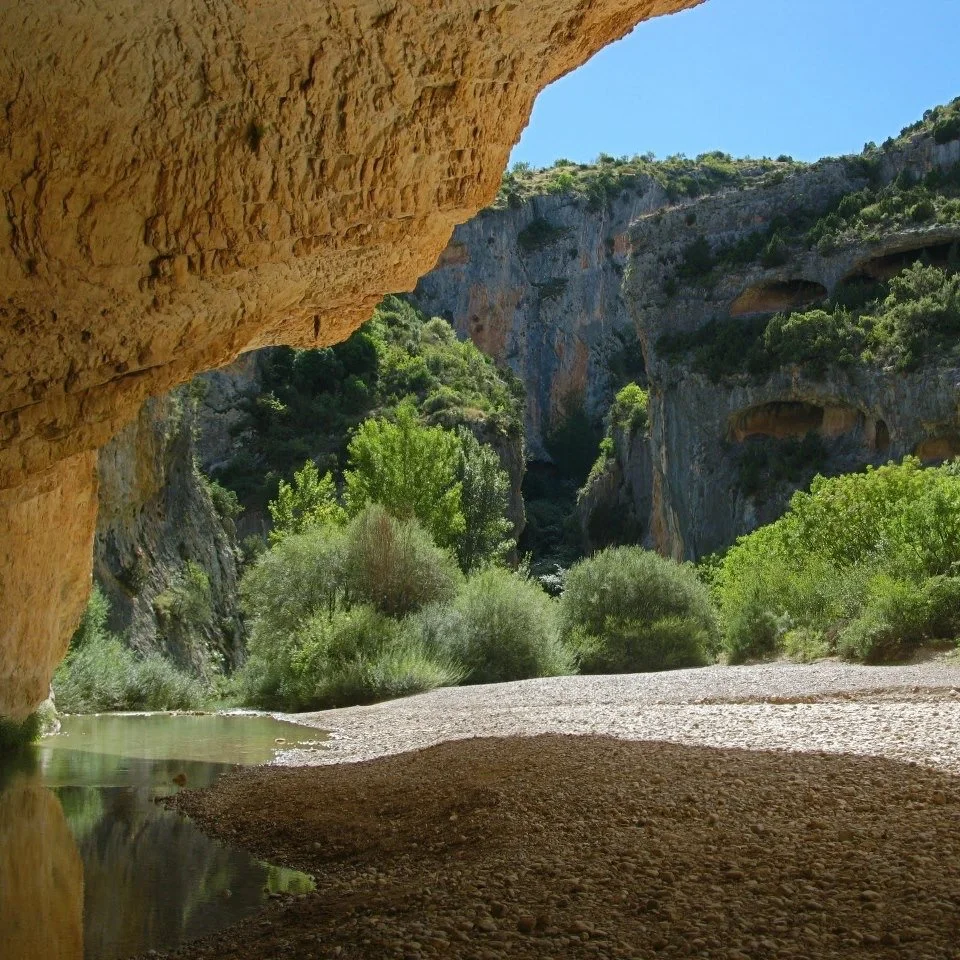
Alquezar is located in the ‘Sierra y cañyones de Guara’ national park in the Somontano region of Aragon. It is a promontory of the Spanish Pyrenees. The area consists of a wild limestone mountain range, intersected by deep ravines with clear streams and rock walls rising for tens of metres. The highest peak is the Guara (2077 m). Bird and nature lovers will find quiet and rugged nature with a wide variety of special birds and plants. In particular, you can regularly see the griffon vulture and the Egyptian vulture circling and sometimes the rare bearded vulture. Along the Rio Vero, you can also visit a number of prehistoric sites with petroglyphs.
Around the village, the vegetation is Mediterranean with almond and olive groves. Southwards in the valley of the Rio Vero are the vineyards for the renowned Somontano wines. The area is one of Spain's most important DO regions and a bodega visit is highly recommended. Despite high temperatures in summer (sometimes as high as 35°C), the mountainous area is always beautifully green due to the many rivers and rain in winter.
South of the Aragonese Pyrenees, the interior has a Spanish continental climate: summer is sunny, warm and almost dry. In winter, it can be cold at night but with daytime temperatures topping 20°C in sunny weather. The region has around 2,700 hours of sunshine a year and limited rainfall. Until late October, the weather is often excellent, but even around the Christmas holidays it is usually lovely hiking weather. From mid-February, the almond blossom blooms are in full bloom and sunny days are common. In April, May and June, the area is richly green and many different flowers bloom.
An active holiday
-
There are many hiking possibilities starting from the village. You can choose from a variety of short and long walks, most of which are well marked. The house has a documentation folder with various routes available, some of which start directly from the house.
From Alquézar, for instance, you descend into the gorge of the Río Vero. Highly recommended is the ‘Ruta de las pasarellas’ where you walk in the gorge right above the Río Vero over metal bridges along the rocks. The climb back is not too steep through a field of old olive trees.
You can also head into the mountains, visiting caves with ancient petroglyphs and enjoying views of the snow-capped Pyrenees. The nearby ‘Balsas de Basacol are a great place to cool off in the summer months.
There is also the possibility of booking a guided tour from the (Dutch-speaking) nature and bird guide in the village.
-
Alquézar is a starting point for several canyoning trips. Other options for the adventurous traveller include rock climbing and mountain biking. There are several companies in the village where you can book these activities including any equipment needed.
-
In Alquézar, you will find a wide range of restaurants, terraces and delicatessen shops. The local restaurants serve, among other things, the regional dishes of Aragon. From simple to refined, in all price ranges. For bigger shopping and a large choice of shops, you can go to Barbastro, a pleasant town 20 minutes' drive away. On the way, you will drive through vineyards and can visit one of the wineries for a Somontano wine tasting.
Lovers of pure cuisine can indulge in a rich selection of local products. Wines, cheese, olive oil, almond products and honey: come discover and enjoy the flavours!

